
Even though I don’t believe in recipes for success, I do believe I’ve found a few ingredients that shaped my career in a positive way. Over time, I started saying things like “you should do this every year, you’ll benefit” or “doing this helped me succeed in that.” I truly believe that these simple rules can boost your career, just like they did for me.
Without further intro, let’s dive in.
1.Read a Scientific Paper
I’m not a researcher, but after my short period in academia, I learned the importance of understanding someone else’s thoughts. I still remember my teacher saying: “A good software engineer writes great algorithms, but a great one understands very bad code.” She was absolutely right.
This is a skill you must develop, and the best way to practice it is by reading research written by others. Add notes, spend hours breaking it down, and finally see it through the eyes of the person who wrote it.
Why does this help so much?
Some details will never leave the paper unless they become mainstream. No one will write a Medium article about them.
A well-written paper will force you to learn new concepts, sometimes pushing you toward even more papers.
Papers are often reviewed by multiple experts, making them a unique source of polished ideas and methodologies.
Yes, it’s time-consuming. I still go back to scientific papers I read years ago, because I never had the time to fully understand them. And that’s okay. Take your time, make the paper yours, and extract what you need from it — it’s not homework.
Here is a short starter list:
“The Elements of Statistical Learning” (Hastie, Tibshirani, Friedman, 2001/2009)
“Random Forests” (Breiman, 2001)
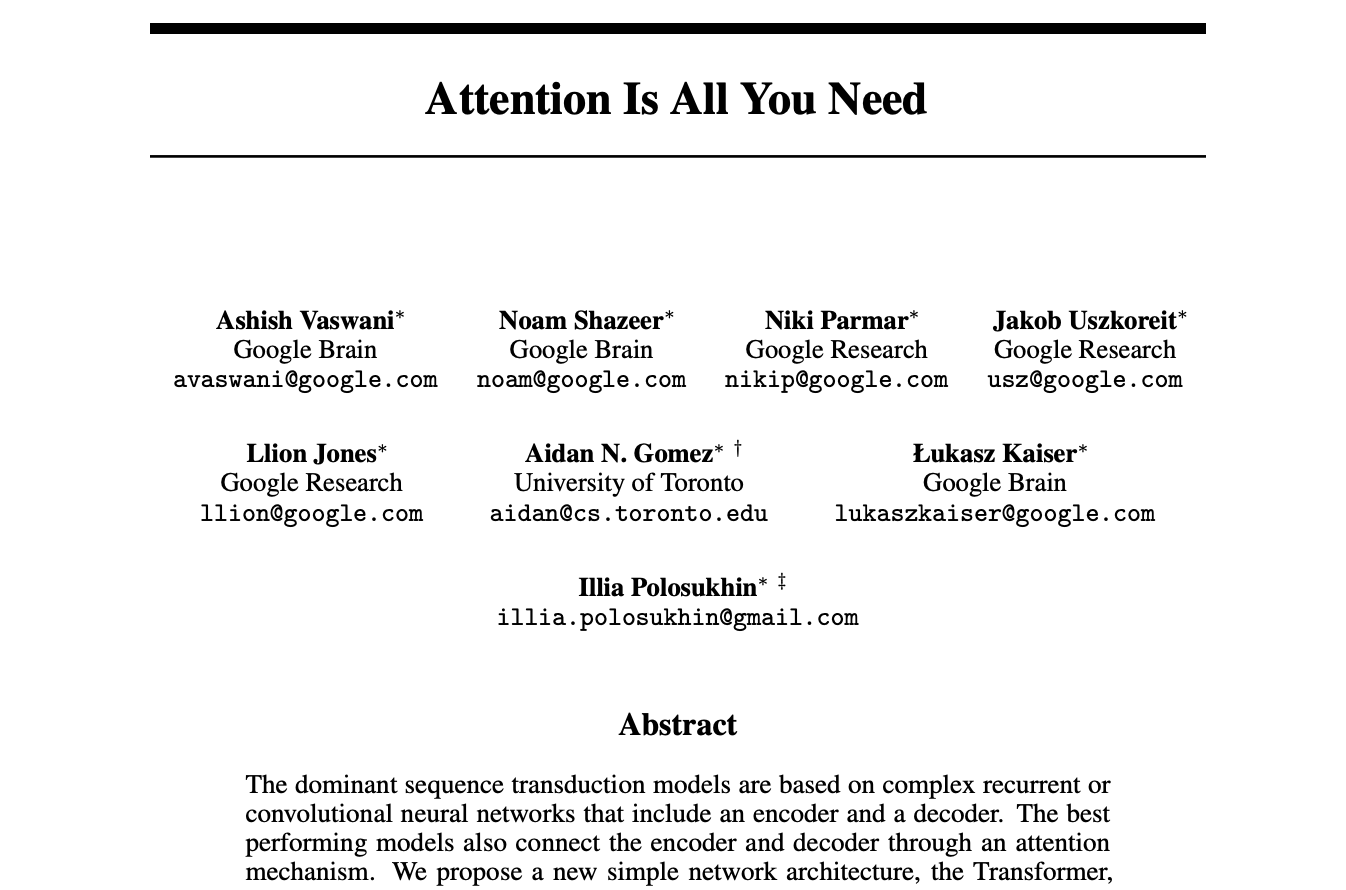
“Attention Is All You Need” (Vaswani et al., 2017)
“XGBoost: A Scalable Tree Boosting System” (Chen & Guestrin, 2016, KDD)
“Hidden Technical Debt in Machine Learning Systems” (Sculley et al., 2015, NIPS Workshop)
2.Go To A Conference
We live in a bubble, surrounded by people who think like us. That’s part of our strength as specialists, but it also makes us forget that most of the world doesn’t know much about data science or AI.
Don’t take your field for granted. You’re lucky to be in it, and you probably underestimate how much people value even a small piece of your knowledge.
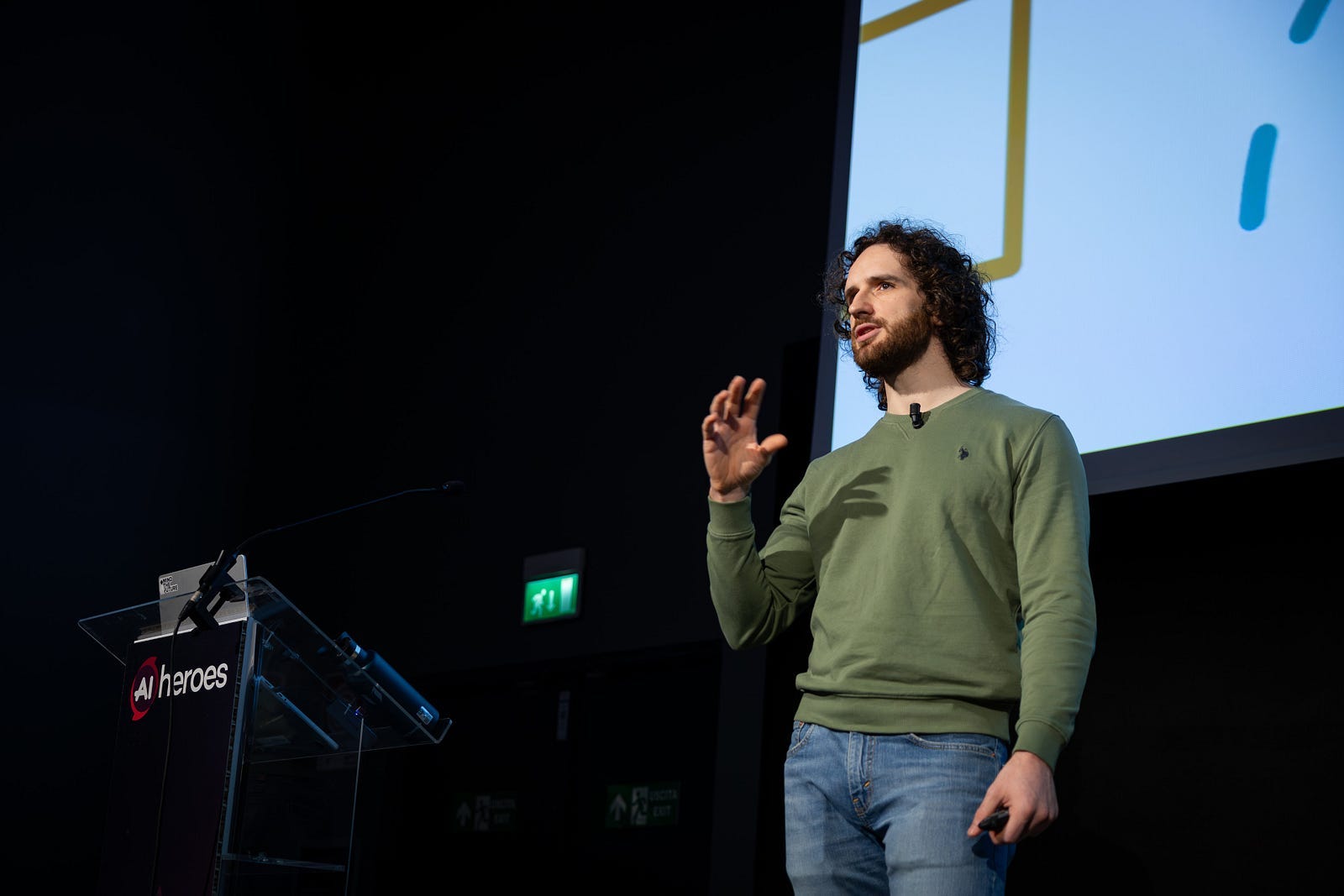
I still remember the first time I presented something at a local meetup. Someone reached out on LinkedIn afterwards, and I thought they must have confused me with someone else. They hadn’t. After we spoke about my projects, they became so excited that they joined me on stage to discuss the details — from clustering algorithms to regression models to user feedback. The audience response was unexpectedly positive, and more importantly, they were happy to hear a real use case where a model had actually been deployed (back in 2018, this was still a rarity).
Another benefit: you learn how to pitch technical concepts to non-technical people. Inside your company, at least people understand the business use case. But in front of a mixed audience, that’s when you truly master storytelling.
So, go out, find an audience, and share one of the many things you’ve worked on. They’ll be grateful — more than you might imagine.
3.Discover A New Python Library
The best way to do this is by applying the library to a problem you care about — not just by running demos or filling your Colab folder with notebooks you’ll never revisit.
Sometimes you’ll get lucky and do this as part of your job, but if not, invest some time once a year to explore something new.
Before I adopted this mindset, I would skim through new technologies without really understanding how to use them in practice. That’s fine, but it doesn’t let you dive into the intentions of the contributors or the real value of the library.
When I started experimenting with CrewAI, I had a clear goal: building an agentic AI application to plan my ski holidays. That gave me real context to test its strengths and limitations. Later, I even ran a workshop at PyConDE based on this project.
4.Contribute To An Open Source Library

This is directly connected to the previous point. Working with a new library, especially in production, forces you to dig deeper. Eventually, you’ll know it well enough to start contributing.
I don’t consider myself an “open source contributor,” but I’ve contributed to many projects simply because I couldn’t wait for someone else to fix a bug. If it blocked me, I fixed it — especially when it came to Python libraries. That’s rewarding and useful, because it helps you unblock yourself.
The same goes for new features. If something is missing, propose it. If you feel strongly about a different direction, fork the library and build on it.
These things start to make sense once you’re really committed as a user. Sometimes, being a user naturally leads to becoming a contributor — even through small changes. That’s the beauty of open source.
5.Write a Blog Article
And finally, write! Capture your ideas, experiences, and lessons, and shape them into something concrete.
Writing a blog isn’t just about showing off — it’s about forcing yourself to stop, think, and explain complex concepts in simple words. Think of how much effort goes into a single StatQuest video. Ten minutes of content probably equals at least two hours of preparation.
For data scientists, writing is even more valuable. We work with non-deterministic systems that require careful explanation. Writing teaches you to clarify, simplify, and engage.
Look at how many articles explain neural networks. They all talk about the same algorithm, but each adds something: a new perspective, a creative explanation, a critique, a unique visualization. There’s always room for one more voice.
So, take your chance. Write something.
Conclusions
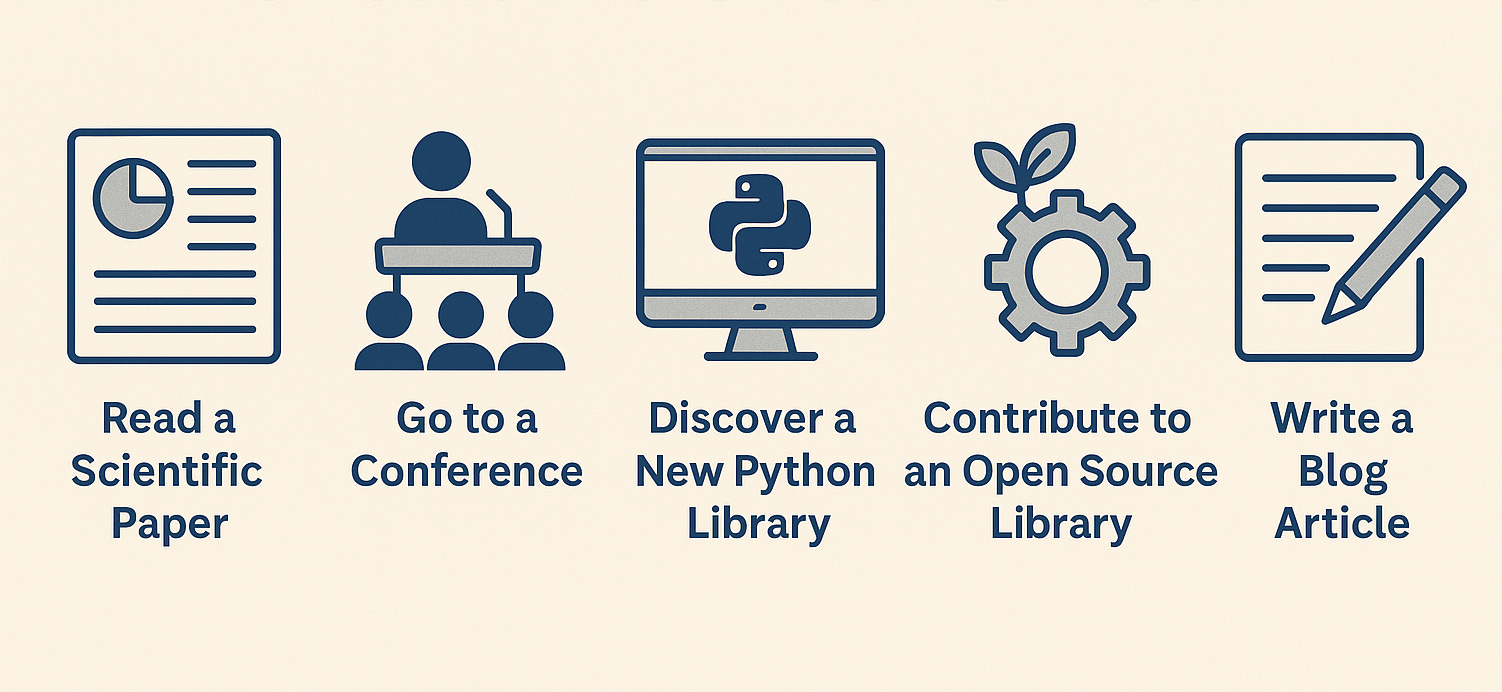
None of these activities are huge commitments on their own, but together they can transform the way you grow as a data scientist:
Reading a paper stretches your thinking, conferences connect you with people and ideas, new libraries expand your toolkit, open source builds your confidence, and writing sharpens your communication.
Think of them as annual checkpoints — not obligations, but opportunities. Each year, you can look back and say: I learned something new, I shared something with others, and I pushed myself forward.
That’s how careers are built — not in one big leap, but through small, intentional steps that compound over time.